
The phrase dream costume patterns can sound like a license to plunder the moon. It is not. For makers, the stronger use of Santa Barbara Museum of Art’s As If in a Dream: History, Fantasy, Future is slower and more disciplined: study the exhibition’s stated themes, then build original garment structures that answer them. The exhibition opened on March 1, 2026 and continues through January 3, 2027; SBMA describes it as an inquiry into how artists merge memory and imagination, with sections focused on place, bodies, and still lifes, and with artists including Alice Baber, Dominic Chambers, Eduardo Chavez, Rafael Coronel, Odilon Redon, and Max Hooper Schneider in the museum’s materials SBMA’s 2026 exhibitions release.
Dream Costume Patterns As Translation
Drafting Dream Costume Patterns Without Copying
A museum show is not a costume rack. Treat it as weather: it changes the air around your sketchbook, but it does not hand you a finished sleeve. The ethical pattern-maker begins by translating broad visual ideas—memory, distortion, soft apparition, object-study—rather than tracing a living artist’s surface language or reproducing a specific artwork as merchandise. That distinction matters for artistic integrity and for creator commerce. A costume can honor an exhibition’s questions without pretending to be an authorized extension of any artist’s practice.
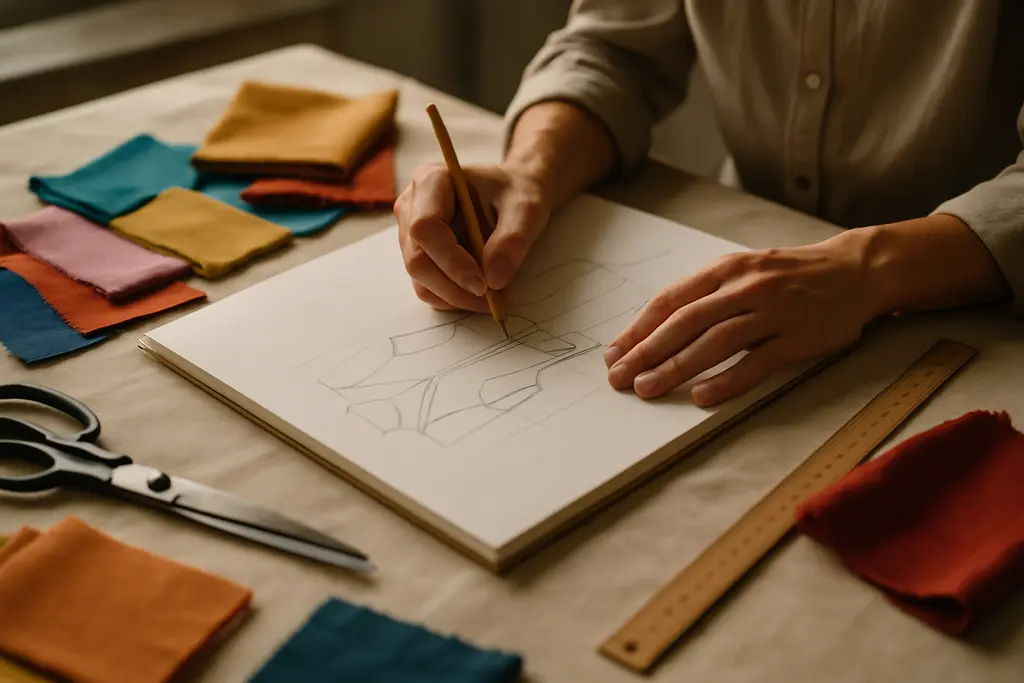
For dream costume patterns, start with three columns in the notebook: body, place, object. Under body, write posture words: bent, floating, guarded, elongated. Under place, write earth words: strata, ridge, dust, horizon. Under object, write still-life words: shell, thorn, vessel, seed, urchin. These words become cutting instructions. A guarded body might suggest a crescent shoulder cape. Strata might become layered hem bands. A shell might become a detachable hip form made from quilted cotton or foam. The firefly glow comes from the pattern logic, not from copying the image.
Why The Exhibition Fits Costume Study
SBMA’s stated triad—place, bodies, still lifes—is unusually useful for costume builders because it maps cleanly onto garment systems. Place can guide silhouette and palette. Bodies can guide fit, stance, and the architecture around joints. Still lifes can guide repeat motifs, closures, headdresses, cuffs, and surface embellishment. Odilon Redon’s presence in the exhibition, as noted in the research, also gives makers a reason to study veiling, symbolic figures, and the suspended mood of dream imagery. That does not mean copying Redon’s Salomé or any other listed work. It means asking what a veil does to time, what a long torso does to gravity, and what a dark outline does to an otherwise pale garment.
Pattern Drafting From Memory And Motif
The Muslin Test As Critical Product Review
The strongest tutorial resource in the research is the muslin mockup method. HCC Cosplay’s process begins with a test version before the final garment, which is exactly the sober step a fantasy costume needs muslin mockup tutorial. As a product-review verdict for aspiring creators: this method is inexpensive, slow in the productive way, and far better than guessing with precious fabric. Its weakness is also clear. Muslin does not behave like every final textile. A test cape in plain cotton may hang differently from chiffon, organza, felt, or quilted foam. So the creator should test proportion in muslin, then test one small sample in the final material.
The safest way to make dream costume patterns wearable is to begin from a basic block: bodice, skirt, trouser, cape, or hood. Pin paper extensions where the dream logic asks for excess. Add height at the shoulder, not everywhere. Lengthen one hem, not all hems. If every line screams, the body disappears. I would mark the first pattern in red pencil for structure and blue pencil for illusion: red for seams, darts, closures, and balance points; blue for veils, overlays, appliqués, and removable objects.
- Place-based costume: layered skirt panels, dusty mineral tones, uneven hems, and topstitching that suggests sediment without copying a painting.
- Body-based costume: raised shoulder pieces, articulated elbow or knee bands, long scarf panels, and controlled drape around the torso.
- Still-life costume: small sculptural motifs such as shells, seedpods, plant shapes, or sea-urchin forms used as brooches, clasps, or crown elements.
Building A Still-Life Accessory
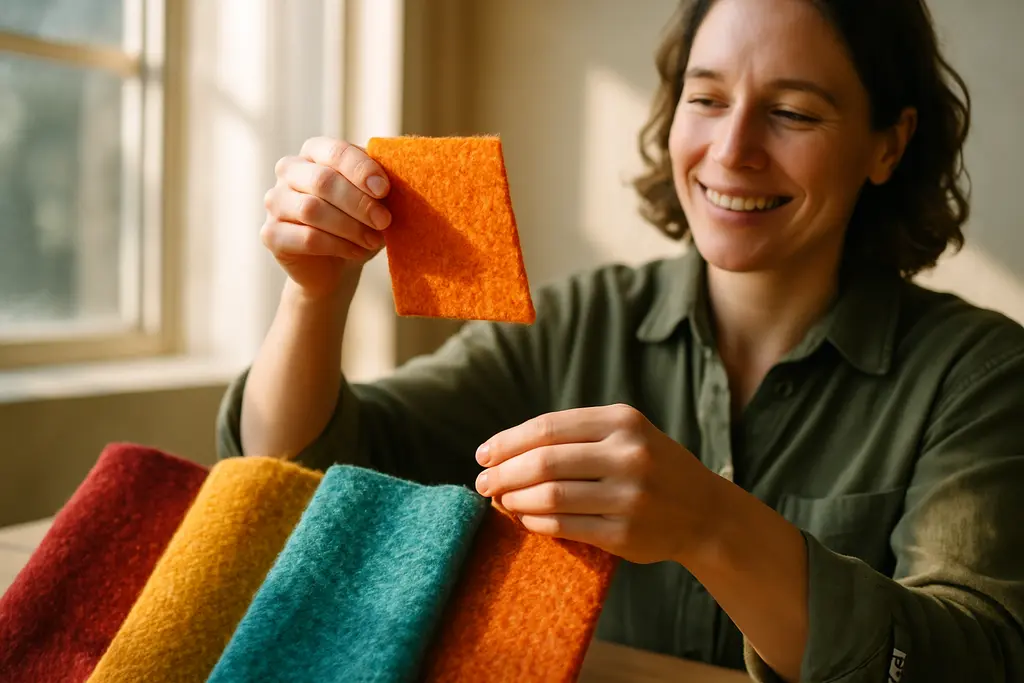
A small object is often the best first pattern. It keeps the maker honest. Try a sea-urchin-inspired brooch as a study in radial geometry, especially because Jorge Pardo’s Untitled (Sea Urchin) is noted in the research as a still-life reference in the exhibition context. Cut two felt circles, slash the upper circle into short rays, stuff lightly, then couch embroidery thread from center to edge. The result should read as an original costume object born from natural form, not a replica of a specific artwork. Mount it to a pin back, belt slide, or hat comb. This is the tutorial scale where beginners learn restraint.
Material Tests, Rights Caution, And Creator Use
Color Memory Over Exact Quotation
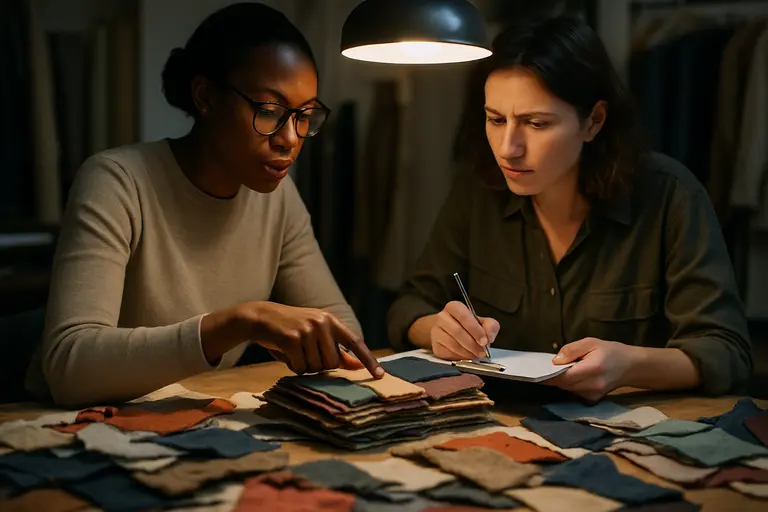
Alice Baber is cited in the research in relation to color memory. For makers, that phrase is more useful than any strict color recipe. Use ombré dye tests, pale underlayers, or transparent overskirts to suggest remembered color rather than direct quotation. Eduardo Chavez’s work, named in the research, can encourage earth-toned palettes—terra cotta, sage, rust—yet those colors are common enough to be used as personal design language. The maker’s job is to assemble a new grammar: a rust cotton underdress, a sage gauze veil, a clay-colored corded belt, perhaps one black curved seam that bends like a remembered ridge.
For creators who sell patterns, teach workshops, or post downloadable templates, the caution grows sharper. Avoid artwork titles in product names unless the context is clearly commentary, education, or personal study, and do not imply museum or artist approval without documentation. This is not legal advice. It is a practical studio boundary. Describe your own construction: “asymmetrical dream cape,” “radial felt brooch,” or “memory-dye overskirt.” Those names sell the maker’s labor rather than borrowing institutional authority. For neighboring arts coverage within the same network, related commentary can be explored through network arts notes at robsonic.org without forcing a false connection.
Where A Related Pattern Study Helps
If the SBMA exhibition gives the spark, a related project can help the hand. Our earlier discussion of DIY costume patterns is useful for makers testing masks, leaf forms, and modular pieces. Use that kind of modular thinking here: keep the base garment plain enough to wear, then let the dream elements attach and detach. A cape collar, a brooch cluster, a belt clasp, and a veil can change the costume without rebuilding the whole pattern. That modular approach is also easier to size for workshops, since accessories forgive small fitting errors better than bodices do.
Creative Costume Inspiration From As If In A Dream
The best costume response to As If in a Dream should feel as if it was found at dawn beside a half-remembered road: strange, but sewn with reason. The exhibition’s framework supports that balance because it does not ask viewers to choose between history, fantasy, and future. Pattern-makers can echo that same triad through construction. History may appear as a familiar cape, apron, veil, or corset line. Fantasy may appear in scale: a shoulder too high, a hem too long, a clasp shaped like a small mineral moon. Future may appear in modular use, workshop sizing, or cleaner pattern notation for other makers.
As a designer’s critique, the concept is fertile but not foolproof. The danger is fog: too much drape, too many symbols, too many pale fabrics with no skeleton underneath. Strong dream costume patterns need a visible cut line, a planned closure, and one controlling idea. Choose body, place, or object as the lead. Let the other two support it. If body leads, fit comes first and motifs stay quiet. If place leads, layers and color carry the argument. If object leads, the accessory should be precise enough to hold attention while the garment stays calm.
That is the useful lesson for aspiring creators. Museum inspiration should sharpen the scissors, not dull them with reverence. Study the SBMA themes, make a muslin, alter without fear, and name your finished pattern after your own construction choices. The resulting costume will not be a borrowed dream. It will be a garment with its own pulse, stitched from evidence, restraint, and invention.