
DIY costume patterns can learn from art without dressing theft in sequins. As of August 26, 2026, Conduits of the Unseen: Women Artists Imagine Other Worlds is scheduled for September 9, 2026 through October 31, 2026 at Andrew Edlin Gallery in Lower Manhattan, with 17 women artists named in the exhibition listing, including Paulina Peavy, Leonora Carrington, Leonor Fini, Agnes Pelton, Madge Gill, and Emma Kunz, among others MutualArt listing. The useful lesson for makers is not to copy a painting, a mask, or a mystical diagram. The better approach is to study structure: thresholds, veils, leaves, eyes, orbiting shapes, and the suggestion of bodies meeting other worlds.
That distinction matters. A costume inspired by an exhibition can honor atmosphere and material thinking, while a costume that imitates a specific work too closely can flatten the artist into decoration. I am writing here as a dressmaker who has seen too many moonlit ideas ruined by cheap shortcuts: glitter where structure was needed, feathers where proportion should have carried the spell. The aim is a cautious working plan for creators who want theatrical garments, masks, or festival pieces shaped by the exhibition’s themes while respecting the original works.
DIY Costume Patterns For Unseen Worlds
DIY Costume Patterns And Source Discipline
The first pattern decision is conceptual, not technical. Before cutting buckram, felt, muslin, or stiff paper, decide which visual problem you are solving. The exhibition’s stated concern with alternate realities, spirituality, cosmic forces, and unseen planes of consciousness gives makers a broad field, but not a license to trace. DIY costume patterns built from this context should translate ideas into wearable architecture: a collar that opens like a gate, a mask that partially conceals the face, a sleeve that acts like a soft antenna, or a hem that suggests ground mist rather than literal smoke.
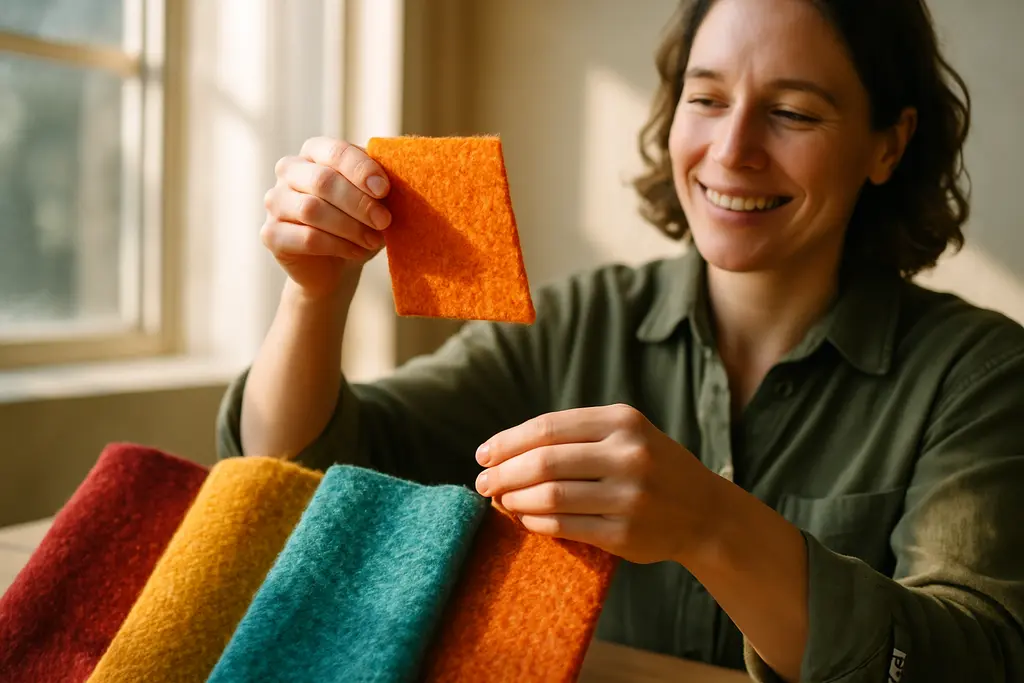
For a beginner, the safest pattern starts with a half-mask and one detachable costume element. That pairing keeps the body mobile and the budget sane. Use a paper template against the wearer’s face, mark the bridge of the nose and brow line, then widen the silhouette by one to two inches beyond the cheekbones if you want a dreamlike profile. The mask can be cut from heavy card, craft foam, felt backed with interfacing, or papier-mâché over a simple form. None of those methods needs to claim historical precision. They only need to produce stable edges, clean eye openings, and enough strength to hold ornament.
Pattern Scale Before Ornament
Many handmade costumes fail because the maker begins with beads. Begin with shadow. Hold the blank mask at arm’s length under weak light. If the silhouette reads clearly before decoration, it may survive feathers, lace, or stitched appliqué. If the blank shape is timid, no amount of trim will save it. A creator can draft three versions: narrow, winged, and crown-like. Tape them to a wall and photograph them from several angles. The camera is cruel, but useful; it catches lopsided curves faster than the eye at midnight.
For sellers or gift makers, keep the language honest. Say “inspired by themes of women artists and unseen worlds,” not “official,” not “after” a living artist, and not a promise that a buyer is receiving a gallery-related object. A related craft network such as Next Clues can be a valuable resource for readers interested in comparing various handmade project formats. However, art references should remain grounded in verified exhibition and museum information.
Carrington Leaf Forms As Costume Structure
Leaves, Not Literal Copies
Leonora Carrington offers one of the clearest costume bridges in the research. The Metropolitan Museum of Art identifies her gouache costume design for the play Penelope: Fantastic Figure with Leaves as a 1959 work Met collection record. That fact is enough to support a design exercise centered on organic extensions, leaf-like planes, and a body that seems halfway between creature and plant. It is not enough to justify copying every contour of the work. The maker’s task is translation.
To draft a leaf-form shoulder piece, draw three elongated ovals with pointed ends: one reaching upward from the shoulder, one sweeping backward, and one falling over the upper arm. Cut them first in paper, then test in felt or cotton canvas. Insert thin wire along the edges only if the piece needs lift. Wire placed through the middle of a leaf shape often creates an ugly crease, like a rib without flesh. A better method is a sandwich: fabric, light interfacing, wire at the outer edge, then a second fabric layer. Stitch slowly around the perimeter and leave a small opening for turning. Press with restraint, because over-flattened fantasy turns into a school craft project.
Color should stay disciplined. Pale green, bone, tobacco brown, dark teal, and soft black can suggest a nocturnal garden without declaring itself a replica. If the costume needs motion, mount the leaves on a capelet rather than a rigid harness. Capelets distribute weight across the shoulders and can be removed during long wear. For DIY costume patterns meant for conventions, performance, or art parties, removability is not a luxury. It is the difference between a garment that lives for six hours and a garment that dies in the first hallway.
Drapery And Negative Space
Carrington’s costume-related reference also points toward drapery. Rather than building a full bodysuit, draft a long tunic with side slits and a narrow belt hidden beneath the leaf forms. The negative space between body and extension gives the figure its charge. I would avoid dense allover print here. A plain base garment lets the attachments carry the idea. If texture is needed, use hand-tacked strips, translucent overlays, or uneven hems. Let the edges whisper instead of scream.
This approach gives makers a repeatable pattern system: base garment, detachable organic forms, and one symbolic focal point. The focal point might be a small moon-shaped brooch, a single beaded eye, or a corded spiral at the sternum. Keep it singular. The human body already supplies enough asymmetry and gesture; the costume should frame that living uncertainty, not bury it under excess.
Mask Making With Ethical Distance
Peavy-Inspired Ornament Without Claiming Peavy
The research notes describe Paulina Peavy as a major figure in the exhibition context and connect her practice with ornamented masks and performance. Because the most reliable allowed exhibition citation here confirms her inclusion but not every mask detail, any maker should treat Peavy-related costume work with care. A respectful pattern can focus on broad mask principles: concealment, ritual framing, layered surfaces, and altered identity. Avoid marketing a handmade object as a Peavy mask or presenting it as a reconstruction.
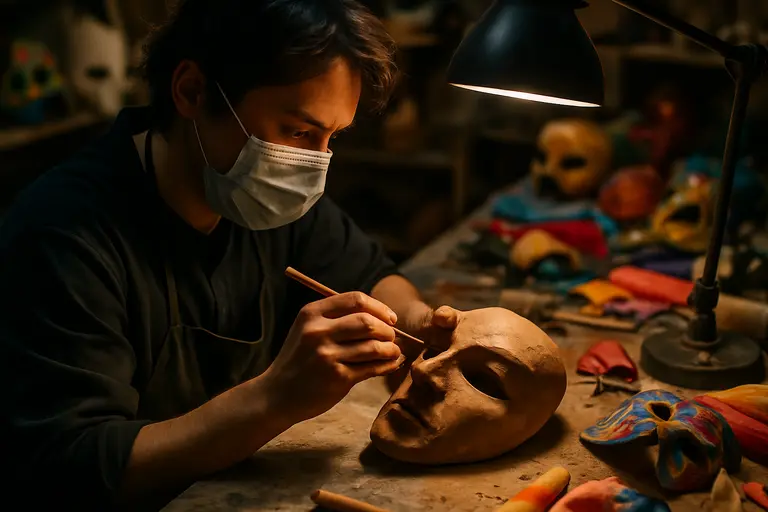
A practical mask pattern begins with comfort. Mark the wearer’s pupil distance, cheekbone width, nose bridge, and temple points. Cut the base slightly larger than the finished shape, because trimming is cleaner than patching. If using papier-mâché, build thin layers and let each stage dry. If using fabric over a base, clip curves before gluing so the cloth does not wrinkle at the nose. For beadwork, concentrate weight near the outer edges or brow, not under the eyes. Heavy lower trim can drag the mask down and make the wearer fight the object all night.
- Beginner: half-mask, painted surface, three appliqués, ribbon ties.
- Intermediate: fabric-covered base, stitched edge, bead clusters, small feather or lace elements.
- Advanced: sculpted brow, detachable veil, wire-supported side forms, balanced ornament mapping.
The most useful test is the shake test. Tie the mask on, look down, turn sharply, and speak. If it shifts, the pattern has failed, no matter how poetic it appears on a table. Fashion is a ghost until it meets breath, sweat, and gravity.
Materials That Do Not Fight The Face
Leather, velvet, lace, stiffened cotton, felt, paper, and lightweight clay-like surfaces each create different risks. Velvet drinks light beautifully but can look bulky around cut edges. Lace gives instant air and shadow, yet it needs a firm backing if it must hold shape. Paper is democratic and cheap, but it punishes rushed drying. Feathers can be theatrical, though they should be placed where they do not tickle the eyes or shed into the mouth. Costume jewelry can work as a focal accent, but old metal findings should be checked for sharp backs before they approach skin.
For creator-commerce, document the pattern as your own draft. Photograph paper tests, failed prototypes, and material trials. This is not only useful for buyers; it disciplines the maker. It shows that the finished object came from an interpretive process, not a lifted image. DIY costume patterns gain credibility when their construction history is visible.
Conduits Of The Unseen Costume Practice
A Pattern Review For Aspiring Creators
As a product concept, exhibition-inspired costume work is strongest when sold as a modular pattern set rather than a single grand outfit. A downloadable pack could include a half-mask base, three leaf attachments, a capelet, and ornament placement maps. That format respects different skill levels and avoids forcing every maker into the same visual result. The weakness is that beginners may still over-decorate unless the instructions include restraint as a design rule.
The best DIY costume patterns from this subject would include warnings alongside measurements: do not block peripheral vision; do not place rigid wire near the eye; do not overload one side of the head; do not claim direct affiliation with the exhibition or artists unless such permission exists. These cautions are not dull. They are the bones that allow fantasy to stand upright.
The exhibition’s power, based on the available listing, lies in women artists imagining worlds beyond ordinary sight. A costume maker can answer that call with humility: a mask that changes the face but still lets the wearer breathe, a leaf form that nods to Carrington’s theatrical imagination without tracing it, a surface that glimmers like a signal from another room. The pattern should feel as if it arrived from a dim corridor, carrying evidence of hands, scissors, thread, and restraint.