
Robert Wun forces audiences to confront the physical realities of change. His latest haute couture presentation isolated the exact moment a subject transitions from one physical state to another. The London-based designer abandoned static, traditional eveningwear to build garments capturing active metamorphosis. By freezing decay, burning, and environmental damage into heavy textiles, Robert Wun explores transformation with an aggressive, highly calculated approach. The runway became a rigorous study in material science and psychological tension. The designer proved that high fashion commands the most authority when it challenges human comfort and subverts standard beauty metrics.
The Mechanics Of Physical Change
Wun treats transformation as a literal, physical process rather than an abstract concept. The collection visualized the harsh effects of the elements on the human form. Models walked the runway wearing coats seemingly scorched by fire. The edges of the fabric peeled away in brittle, blackened layers. The designer achieved this illusion through advanced velvet devoré, chemically burning away layers of fabric to create the exact texture of ash and decay.
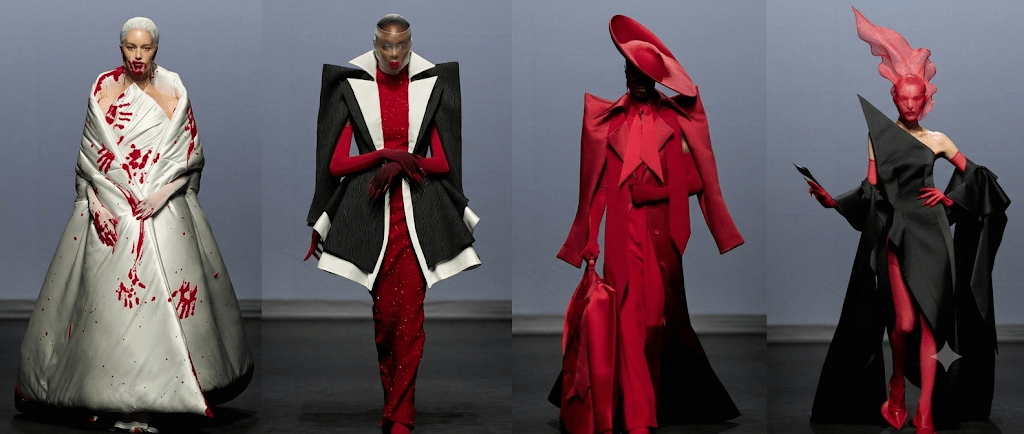
This technique requires exact mathematical precision. A miscalculation in the chemical application destroys the base silk entirely. The atelier spent hundreds of hours perfecting the burn patterns to ensure they looked organic rather than manufactured. The resulting garments looked like surviving artifacts from a massive fire. Wun took the destructive force of a flame and engineered it into a permanent, wearable structure. The clothing captured the exact second before total incineration, trapping the garment in a permanent state of transition.
Simulating Environmental Extremes
The presentation shifted through extreme weather conditions, using fabric to represent the damage inflicted by nature. Rain, snow, and violent wind became structural components of the clothing. A standout piece featured thousands of clear glass beads hand-embroidered onto a dark, sweeping coat. This created the exact optical illusion of a torrential downpour hitting the body. The sheer weight of the beads pulled the fabric downward, mimicking the heavy, saturated drape of soaking wet clothing.
This literal interpretation of a rainstorm required massive technical skill to execute without the garment collapsing under its own physical mass. You can study similar feats of extreme garment engineering in comprehensive haute couture fashion coverage documenting the technical evolution of the Paris runways. The collection moved from rain into freezing winter. Wun applied clustered crystal formations to sharp tailoring, creating the look of frozen water droplets and shattered ice. The light bounced harshly off these crystal clusters, giving the models an icy, untouchable presence.
| Element of Transformation | Textile Technique | Visual Effect |
| Fire and Scorching | Velvet devoré and hand-burning | Decaying, brittle edges mimicking ash |
| Torrential Rain | Micro glass bead embroidery | Heavy, downward drape of wet fabric |
| Winter Freezing | Clustered crystal application | Frozen droplets and shattered ice |
| Biological Mutation | Exaggerated shoulder padding | Rigid, non-human geometric silhouettes |
Anatomy And Structural Resistance
Transformation in Wun’s work extends past surface treatments. He alters the biological silhouette. The collection featured extreme shoulder padding extending outward like rigid blades. These shapes completely obscured the natural curve of the neck and arms. The garments acted as protective shells, isolating the wearer from the chaotic environmental effects simulated on the fabric.
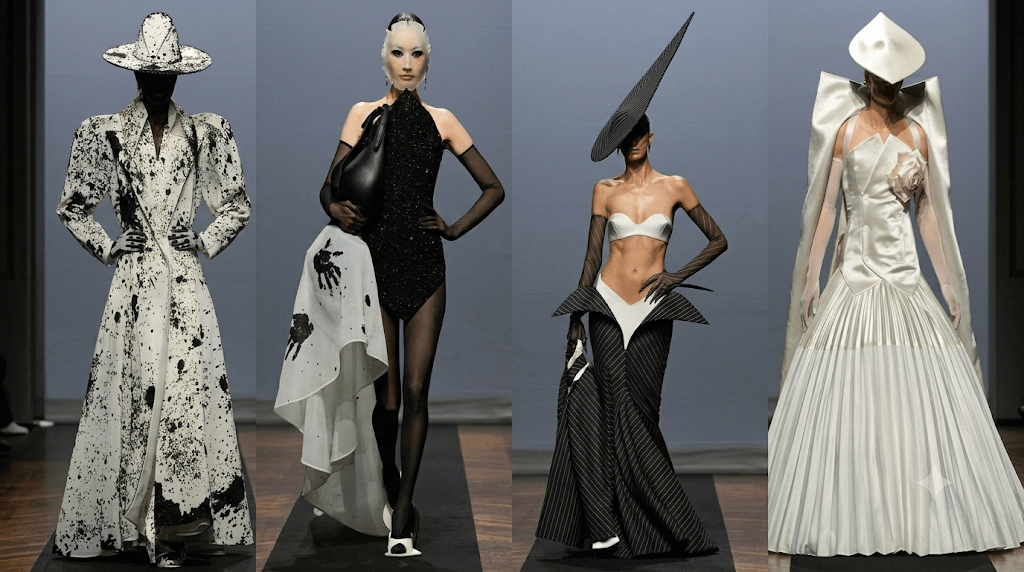
A floor-length gown paired with a massive, face-obscuring headpiece created a highly anonymous, monumental figure. The structural resistance of the tailoring provided a stark contrast to the chaotic, decaying finishes of the textiles. By forcing the body into these severe geometric shapes, Wun dictates exactly how the wearer moves and commands physical space. The rigid corsetry restricted the models’ breathing and forced a slow, highly deliberate walking pace. The clothing turned the human body into a movable sculpture, resisting the natural fluidity of human anatomy.
Redefining Value Through Decay
Standard luxury fashion equates value with pristine, untouched perfection. Wun upends this economic model. He invests thousands of hours of hand labor to make a garment look damaged, stained, or broken. A dress appearing to be covered in spilled red wine or bleeding dye challenges the traditional expectations of haute couture clients.
He forces the industry to find aesthetic value in accidents and destruction. The execution is so precise that the simulated damage becomes the primary selling point of the piece. The intense craftsmanship validates the distressed finish. Decay requires just as much engineering as perfection. A white silk gown featuring a massive, spreading red stain required precise dye mapping to prevent the color from bleeding indiscriminately across the fabric. The stain was painted and set by hand, creating a permanent record of a fleeting accident. This approach redefines exactly what high-paying clients consider luxurious.
The Psychology Of The Runway Narrative
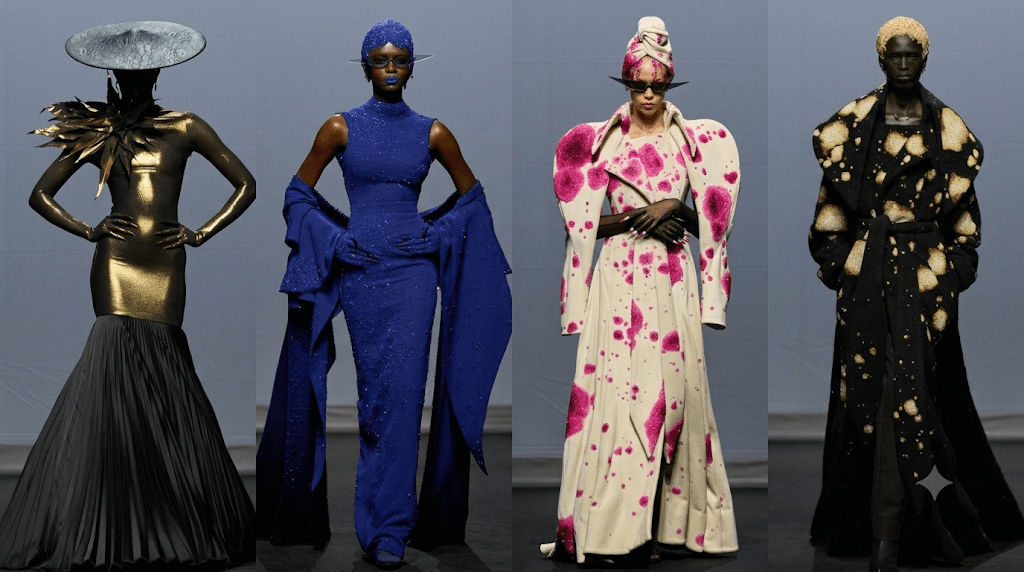
The staging of the presentation supported the heavy visual weight of the garments. The designer utilized a stark, minimal runway, removing any external distractions. The lighting remained cold and clinical. The harsh spotlights hit the glass beads and crystal embroideries to create sharp, blinding reflections. This environmental control forced the audience to focus entirely on the physical details of the clothing.
The narrative progressed from pristine, untouched silhouettes into heavily distressed, traumatized garments. The show eventually resolved into pieces suggesting rebirth and new growth. This progression mirrored the natural life cycle, applying extreme emotional pressure to the concept of standard formalwear. Integrating these intense emotional concepts into personal dressing requires an understanding of advanced avant-garde runway styling to balance the drama with functional wearability. The runway operated as a psychological theater, proving the clothing carried a message far heavier than simple seasonal trends.
Robert Wun established a new baseline for narrative fashion. He constructs garments telling complex stories of survival, damage, and inevitable change. The designer proved that high fashion can tackle serious existential themes without sacrificing technical brilliance. The intense focus on material manipulation and severe anatomical silhouettes guarantees his place at the forefront of the industry. The collection succeeded by forcing observers to find absolute beauty in the breakdown of traditional forms.