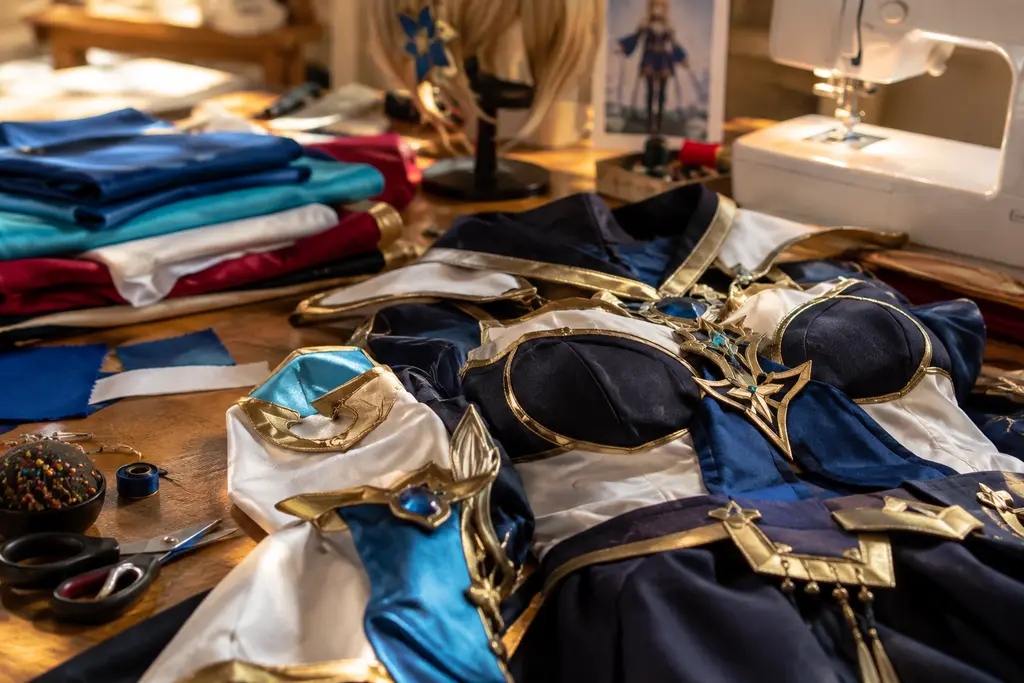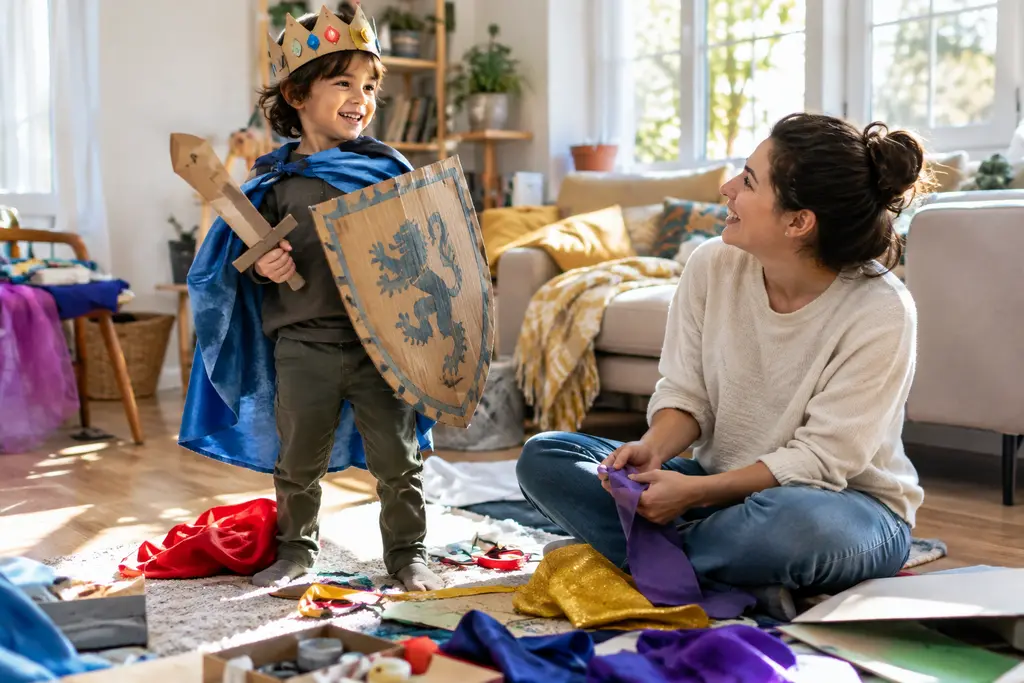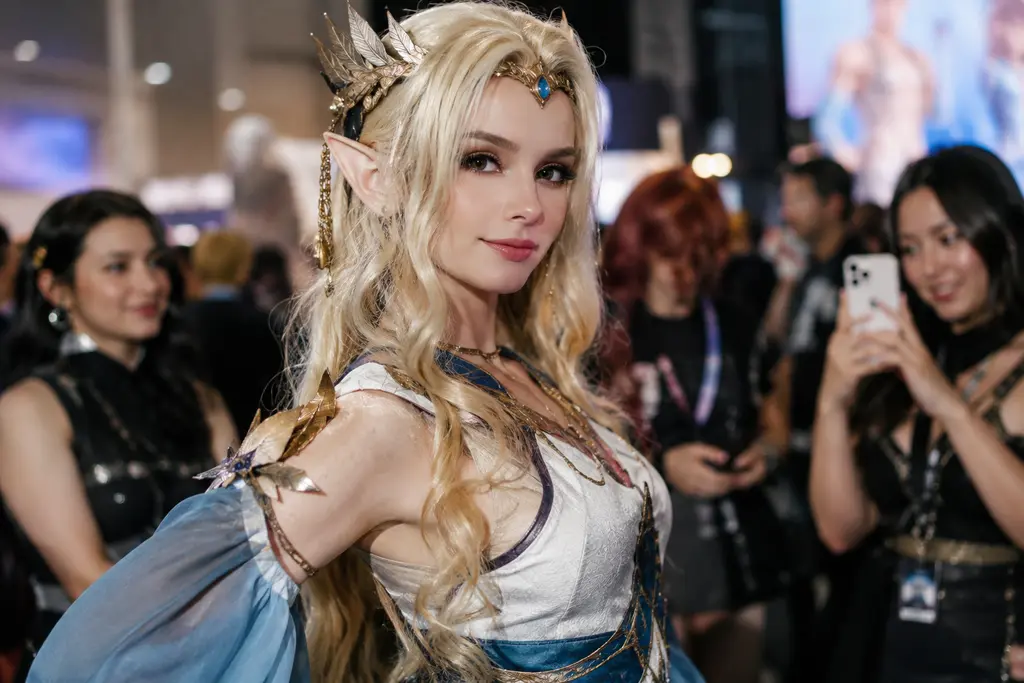
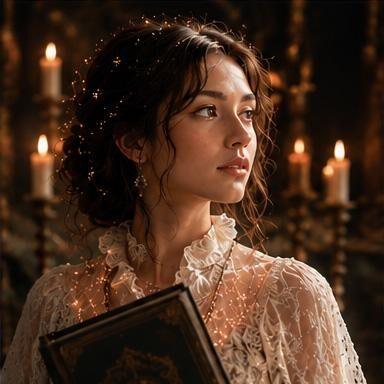
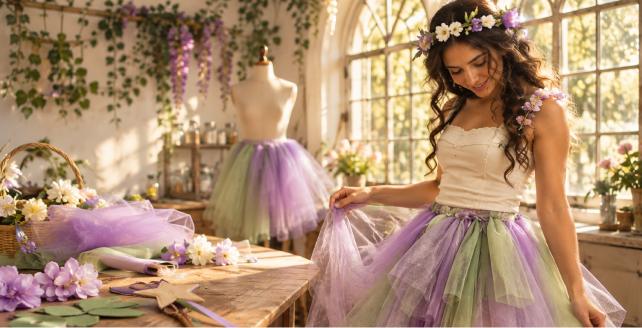
Creating a fairy costume does not require expensive materials, professional sewing skills, or a complicated dressmaking pattern. With a few carefully chosen fabrics, artificial flowers, ribbons, and basic craft supplies, almost anyone can assemble a whimsical outfit inspired by woodland fairies, enchanted gardens, and classic storybook characters.
A creative DIY project is most enjoyable when every element feels thoughtfully chosen, from the fabric and accessories to the activities planned around the occasion. While making a fairy costume is about imagination and craftsmanship, adults exploring unrelated entertainment options may also encounter comparison guides such as Why pick BetOnline?, which examines a sports betting platform. Such services are separate from family-friendly costume activities and are intended only for eligible adults where legally permitted.
A no-sew fairy costume is particularly appealing because it combines affordable materials with creative flexibility. A lightweight tulle skirt provides the recognizable fairy silhouette, a handmade flower crown introduces natural texture, and simple accessories transform everyday clothing into a complete fantasy-inspired outfit.
The project also offers an opportunity to reuse materials already available at home. An old cotton dress can become the foundation of a woodland fairy costume, while leftover fabric strips, artificial flowers, and decorative ribbon can be repurposed into accessories.
For parents preparing costumes for school celebrations, families organizing themed birthday parties, or adults creating outfits for fantasy festivals, the most effective approach is to focus on three elements: comfort, coordinated colors, and carefully constructed details.
This guide explains how to make a no-sew tulle skirt, assemble a flower crown, create lightweight fairy wings, and choose suitable materials while keeping the costume practical and comfortable.
Choosing The Best Materials For A No-Sew Fairy Costume
The quality of a handmade fairy costume depends less on the number of decorations and more on how the materials work together.
Tulle is one of the most useful fabrics for this project because its open mesh structure creates volume without requiring heavy layers. It is commonly used in tutus, veils, decorative skirts, and fantasy-inspired clothing.
However, not every type of tulle behaves the same way.
Soft bridal tulle generally creates a flowing silhouette, while stiffer craft tulle produces a fuller, more structured skirt. Glitter tulle adds sparkle but may shed decorative particles during handling and wear.
For a comfortable costume, softer tulle is often preferable, especially when the skirt will be worn for several hours.
Other useful materials include cotton, felt, satin ribbon, artificial flowers, and flexible craft wire for accessories intended for older wearers.
| Material | Best Use | Main Advantage |
|---|---|---|
| Soft tulle | Fairy skirts and overlays | Lightweight, flowing appearance |
| Stiff craft tulle | Full tutu-style skirts | Holds a rounded silhouette |
| Cotton fabric | Costume base and lining | Comfortable against the skin |
| Felt | Leaves, flowers, and decorative shapes | Easy to cut without fraying |
| Satin ribbon | Decorative accents | Adds color and shine |
| Artificial flowers | Flower crowns and accessories | Reusable and available in many styles |
| Elastic | Skirt waistband | Flexible fit |
A beginner-friendly costume can be made with approximately 25–50 yards of six-inch-wide tulle, depending on the wearer’s waist measurement, skirt length, and desired fullness. This is a planning range rather than a universal requirement.
The no-sew tutu tutorial from Design Mom, published in October 2025, demonstrates how a simple combination of elastic, tulle, and ribbon can create a decorative skirt without a sewing machine. designmom.com
For the complete costume, gather fabric scissors, a measuring tape, a comfortable elastic waistband, artificial flowers, felt sheets, and optional decorative accessories.
Using a coordinated palette will make inexpensive materials appear more intentional. Sage green, cream, and dusty pink work well for woodland fairies, while lavender, silver, and pale blue create a softer moonlight-inspired appearance.
How To Make A No-Sew Tulle Fairy Skirt Step By Step
The tulle skirt is the central element of most DIY fairy costumes. Fortunately, the basic construction method requires only cutting, folding, and tying fabric.
The process is suitable for beginners because it avoids complicated patterns, seam allowances, and machine stitching.
The most important preparation involves measuring the waistband correctly and cutting the tulle into consistent lengths.
Measure The Waist And Choose The Skirt Length
Begin by measuring the wearer’s natural waist using a flexible measuring tape.
The elastic should fit comfortably without digging into the skin or sliding down during movement. Test the fit before permanently securing the ends.
For a completely no-sew version, use a ready-made continuous elastic waistband or a comfortable stretch headband that fits the intended wearer. This avoids relying on a temporary safety-pin closure.
Next, decide how long the finished skirt should be.
A short fairy tutu may extend approximately 10–12 inches below the waistband, while a longer woodland-inspired skirt may reach 16–20 inches or more, depending on the wearer’s height.
Each strip of tulle must be approximately twice the desired finished skirt length, with a little extra allowance for the knot.
For example, a skirt designed to hang 12 inches below the waistband can begin with strips approximately 25–26 inches long.
Cut And Prepare The Tulle
Place the tulle on a clean, flat surface and cut it into strips of equal length.
Six-inch-wide tulle rolls are particularly convenient because the material is already narrow enough for a tied tutu.
If using fabric purchased by the yard, cut it into strips approximately four to six inches wide.
For a fuller skirt, prepare additional strips rather than making each strip excessively wide.
Alternating two or three colors can create a more natural fantasy appearance. For example, combine pale green, ivory, and muted lavender rather than using a single bright shade.
A useful technique is to organize the cut strips into small color groups before attaching them to the waistband.
This makes it easier to distribute the colors evenly.
Attach The Tulle Without Sewing
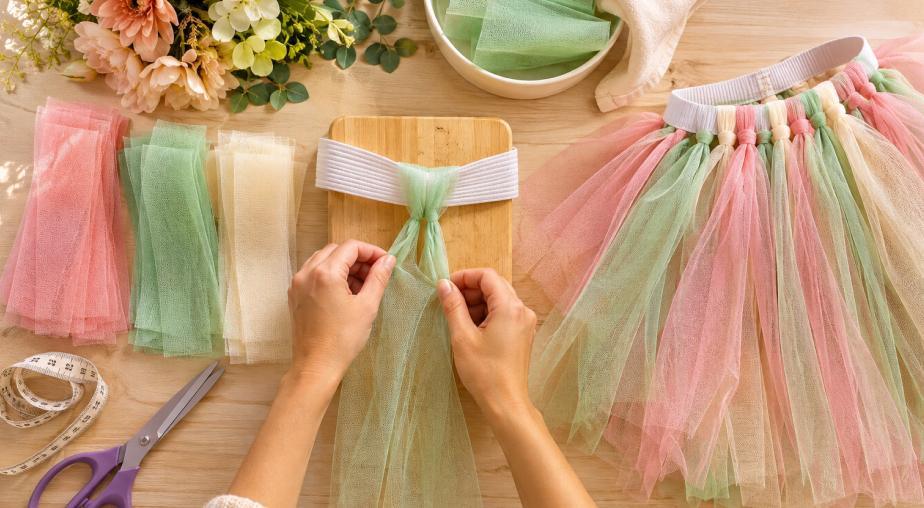
Stretch the continuous elastic waistband around the back of a sturdy chair or another smooth, appropriately sized object.
Fold one strip of tulle in half, creating a loop at its midpoint.
Slide the folded loop behind the waistband, bring the two loose ends through the loop, and gently tighten the knot.
This creates a lark’s-head-style attachment that holds the fabric around the elastic.
Continue attaching strips around the waistband until the skirt reaches the desired fullness.
Avoid pulling the knots excessively tight. Over-tightening can distort the elastic and make the waistband uncomfortable.
The established Joann no-sew tutu instructions use the same folded-strip method and recommend keeping the knots on one side of the waistband to maintain a consistent finish. joann.com
Once the waistband is covered, remove the skirt from the chair and gently separate the layers of tulle.
Trim any uneven ends and test the finished skirt over leggings, shorts, or another comfortable base garment.
The result should be lightweight, flexible, and easy to move in.
Creating A Handmade Flower Crown With Artificial Flowers
A flower crown provides the most recognizable finishing touch for a woodland or garden fairy costume.
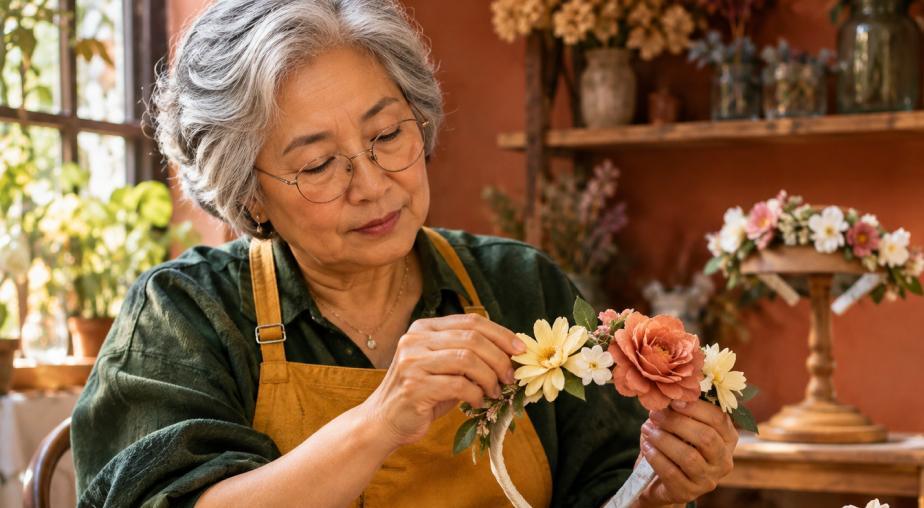
Unlike a complicated floral headpiece, a simple no-sew crown can be assembled using a comfortable fabric headband, artificial flowers, and felt.
A soft headband is often more practical than exposed floral wire, particularly for children, because it avoids sharp wire ends and complicated fastenings.
Start by selecting three to five medium-sized artificial flowers in complementary colors.
For a woodland fairy, choose cream blossoms, pale pink roses, and muted green leaves. For a spring-inspired fairy, combine yellow daisies, lavender flowers, and soft peach accents.
Remove any rigid plastic stems or sharp components, leaving the decorative flower heads intact.
Cut several small felt circles slightly smaller than the flower bases.
An adult can use fabric-safe adhesive to attach each flower to the headband, then reinforce the attachment with a felt backing where the headband’s construction allows it.
Allow the adhesive to cure fully according to the manufacturer’s instructions before wearing the crown.
Arrange the largest flower slightly off-center and surround it with smaller blossoms.
This creates a more natural composition than placing identical flowers at perfectly equal intervals.
Avoid overcrowding the headband. Too many decorations can make it heavy, unstable, or uncomfortable.
For younger children, use securely attached fabric flowers without detachable beads, plastic gems, or small decorative pieces.
The U.S. Consumer Product Safety Commission explains the importance of assessing small-part hazards in children’s products, particularly when items are intended for children under three. CPSC.gov
A finished flower crown should feel comfortable, remain stable during normal movement, and complement the skirt rather than overpower it.
DIY Fairy Wings Using Lightweight Household Materials
Fairy wings can transform a simple tulle skirt and flower crown into a complete storybook costume.
However, large decorative wings are not always practical. Heavy frames, exposed wires, and oversized structures can make it difficult to sit, walk through doorways, or participate in activities.
For a comfortable no-sew costume, lightweight felt or flexible craft foam provides an accessible alternative.
Begin by drawing a symmetrical pair of wings on a large sheet of paper. A butterfly-inspired shape works particularly well, with rounded upper wings and smaller lower sections.
Transfer the outline onto a sheet of flexible craft foam or sturdy felt and carefully cut out the shape.
Instead of using a rigid wire frame, reinforce the center with an additional piece of felt or foam attached using suitable craft adhesive.
Decorate the wings with larger felt shapes in contrasting colors. Pale blue wings can feature silver-gray details, while forest-green wings can incorporate cream-colored leaf patterns.
Avoid attaching loose glitter, sharp decorative pieces, or small plastic gems to costumes intended for young children.
For the attachment system, use a properly fitted, commercially made costume harness or securely fasten lightweight wings to the back of an existing garment using a suitable removable fabric fastening system. Test the attachment before use.
Do not use long cords or loose ribbons around a child’s neck or shoulders.
For very young children, decorative wings may be better used as a supervised photo prop rather than worn during active play.
The finished wings should allow the wearer to move freely without catching on nearby objects.
Magical Fairy Accessories You Can Make Without Sewing
Accessories help establish the personality of a fairy costume without requiring additional clothing construction.
A simple outfit can become a forest guardian, flower fairy, moonlight fairy, or enchanted-garden character depending on the colors and decorative details.
Rather than adding every possible accessory, select one or two elements that support the overall theme.
Create A Simple Fairy Wand
A fairy wand can be made from a smooth wooden dowel, a large felt star, and decorative fabric.
Cut two matching star shapes from stiff felt and attach them securely around the upper end of the dowel using appropriate craft adhesive.
For an older child or adult, short decorative fabric streamers can be added below the star, provided they do not create an entanglement hazard.
For younger children, avoid long trailing ribbons and use a lightweight, blunt-ended wand without detachable decorations.
A woodland fairy wand can feature a large felt leaf instead of a star, while a moonlight fairy design might use a crescent-shaped decoration.
Make Felt Leaves And Decorative Flowers
Felt is particularly useful for no-sew costume accessories because it can be cut into decorative shapes without the edges unraveling.
Create oversized leaves, flower petals, or butterfly shapes using paper templates.
These decorations can be attached to an existing fabric belt, a reusable headband, or a suitable costume accessory using fabric-safe fastening methods.
For a more natural appearance, combine several shades of green rather than relying on one color.
A woodland fairy costume might feature olive, sage, and moss-green leaves, while an autumn fairy can incorporate burgundy, copper, and mustard tones.
The key is to maintain visual consistency between the accessories and the skirt.
Five Fairy Costume Themes Using The Same Basic Materials
One of the strongest advantages of a DIY fairy costume is its adaptability.
The same skirt construction method can support several different fantasy characters simply by changing the colors, flower selections, and accessories.
| Fairy Theme | Main Colors | Recommended Details |
|---|---|---|
| Woodland Fairy | Sage, moss green, cream | Felt leaves, flower crown, natural textures |
| Moonlight Fairy | Lavender, silver, pale blue | Crescent wand, soft tulle layers |
| Spring Garden Fairy | Peach, yellow, mint | Daisy crown, pastel flowers |
| Autumn Fairy | Burgundy, copper, mustard | Fabric leaves, warm-colored tulle |
| Winter Fairy | White, ice blue, silver | Snowflake shapes, layered white tulle |
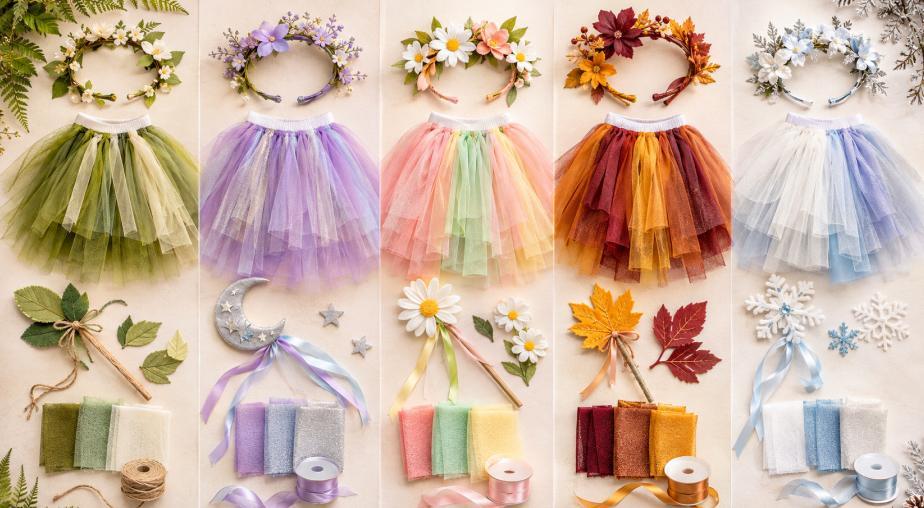
A woodland fairy is particularly suitable for outdoor photography, nature-themed celebrations, and storybook dress-up activities.
A moonlight fairy works well for fantasy-themed parties, while a spring garden fairy offers a cheerful alternative for birthdays and school events.
Autumn-inspired designs can incorporate seasonal colors without requiring a traditional Halloween costume.
The winter fairy theme benefits from layering, allowing the wearer to combine the decorative skirt with warm, comfortable clothing.
These variations demonstrate how a single construction technique can produce several visually different costumes without purchasing an entirely new set of supplies.
How To Make A Fairy Costume Comfortable And Safe
Comfort should influence every material and construction decision.
Although tulle creates an attractive silhouette, its mesh texture can feel scratchy against bare skin. Wearing the skirt over leggings, shorts, or a soft cotton dress helps prevent irritation.
The waistband should remain secure without restricting movement, and the skirt should be short enough to avoid dragging on the floor.
Footwear is equally important. Comfortable flats or sneakers generally provide better support than decorative shoes that are unsuitable for extended walking.
Safety also matters when choosing accessories.
The U.S. Consumer Product Safety Commission’s costume safety guidance recommends checking costume fit, visibility, and flammability risks. Costumes should not obstruct vision or create unnecessary tripping hazards. CPSC.gov
Tulle and other costume fabrics should be kept away from candles, fireplaces, and open flames. A homemade costume should never be assumed to be flame-resistant.
For children, avoid loose cords around the neck, detachable small decorations, sharp wire ends, and accessories that interfere with movement.
The CPSC also identifies drawstring hazards in children’s outerwear, reinforcing the importance of avoiding hazardous cords and entanglement risks in costume construction. CPSC.gov
Adults should handle sharp scissors, hot-glue tools, and any other potentially hazardous equipment. Adhesives must be fully cured before the costume is worn.
A short fitting session before the event can reveal problems that are difficult to notice while constructing the outfit.
Budget-Friendly Ways To Reuse Fabrics And Costume Materials
A handmade fairy costume does not need to be a single-use project.
Choosing reusable materials can make the outfit more affordable and reduce unnecessary fabric waste.
Instead of purchasing a new dress, begin with a plain T-shirt, cotton top, or existing summer dress. The tulle skirt can be worn over these garments, creating the appearance of a complete costume without altering the original clothing.
Artificial flowers from previous decorations can be repurposed into a crown, while leftover felt can become leaves, stars, and decorative shapes.
Old fabric scraps can also replace some tulle layers.
A July 2026 tutorial from Ben Franklin Crafts demonstrates how cotton fabric strips can be tied onto an elastic waistband to create a no-sew skirt suitable for costumes and imaginative play. Ben Franklin Crafts and Frame Shop
This approach offers an alternative for anyone who prefers softer fabric textures or wants to reuse material from previous projects.
For a balanced design, combine a limited number of cotton strips with tulle rather than adding too many competing textures.
A practical budget should prioritize the materials that have the greatest visual impact: the skirt fabric, a comfortable waistband, and a few decorative flowers.
Additional embellishments can be introduced only if they improve the finished costume.
How To Style A No-Sew Fairy Costume For Different Occasions
A fairy costume should be adapted to the environment in which it will be worn.
For a school dress-up day, prioritize comfortable footwear, a manageable skirt length, and accessories that can be removed easily.
A flower crown and colorful tulle skirt may provide enough visual detail without requiring wings or a wand.
For a birthday celebration, a fuller skirt and decorative wings can create a more elaborate appearance, provided they do not interfere with games or movement.
Outdoor events benefit from practical layering.
A long-sleeved cotton shirt, comfortable leggings, and weather-appropriate shoes can be incorporated into the costume without compromising the fantasy aesthetic.
For adults attending fantasy festivals, literary-themed gatherings, or costume photography sessions, longer tulle layers and more elaborate floral accessories can create a sophisticated interpretation.
The difference between a costume that looks handmade and one that looks thoughtfully designed often comes down to proportion.
A dramatic skirt generally works best with a simpler top. A large flower crown benefits from understated accessories. Elaborate wings should be balanced with a relatively restrained silhouette.
This principle also applies to color selection.
Two or three coordinated colors usually produce a more cohesive appearance than combining every available shade.
Bringing A Storybook Fairy Costume To Life With Simple Details
The most memorable fairy costumes often rely on thoughtful details rather than expensive materials.
A carefully layered tulle skirt creates movement, a flower crown introduces texture, and one distinctive accessory establishes the character’s identity.
For a woodland fairy, that detail might be an oversized felt leaf. A moonlight fairy could carry a crescent-shaped wand, while a garden fairy might wear a crown of pastel flowers.
These choices help the costume communicate a specific story.
They also make the project more enjoyable for families and beginner crafters, because each person can adapt the design to their preferences and available materials.
A no-sew fairy costume can begin with an ordinary cotton outfit and a few strips of tulle, then develop into a personalized fantasy ensemble through color, texture, and creative accessories.
With careful measurements, comfortable materials, and secure construction, the finished costume can be worn for celebrations, imaginative play, literary dress-up events, and future occasions.
The greatest advantage is its flexibility: individual elements can be removed, reused, recolored, or combined with other garments, allowing one simple DIY project to inspire an entire collection of storybook costumes.