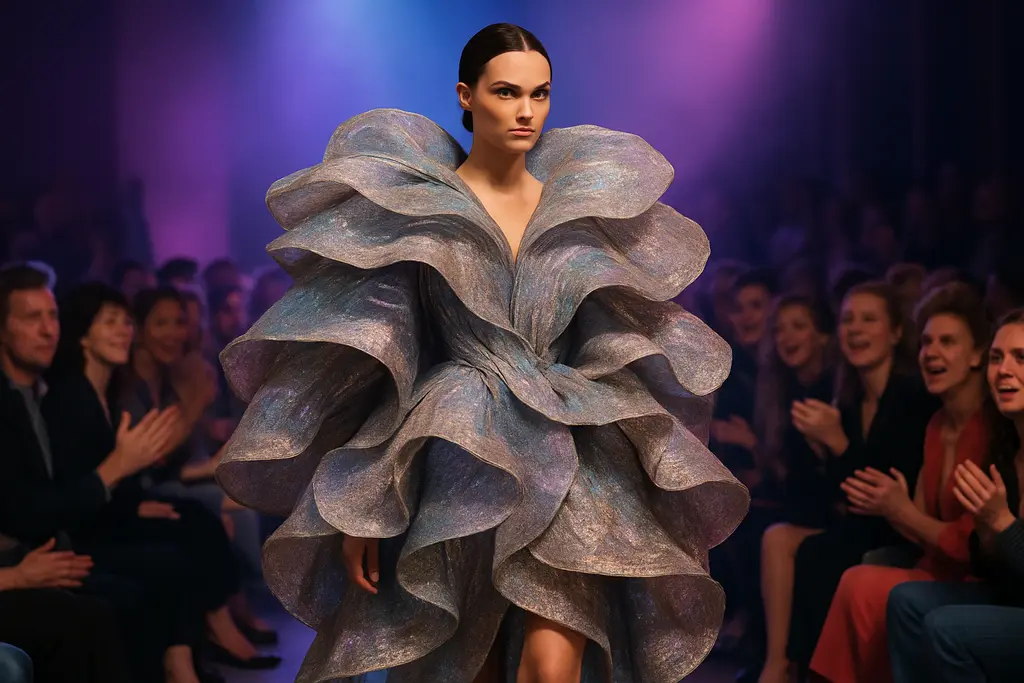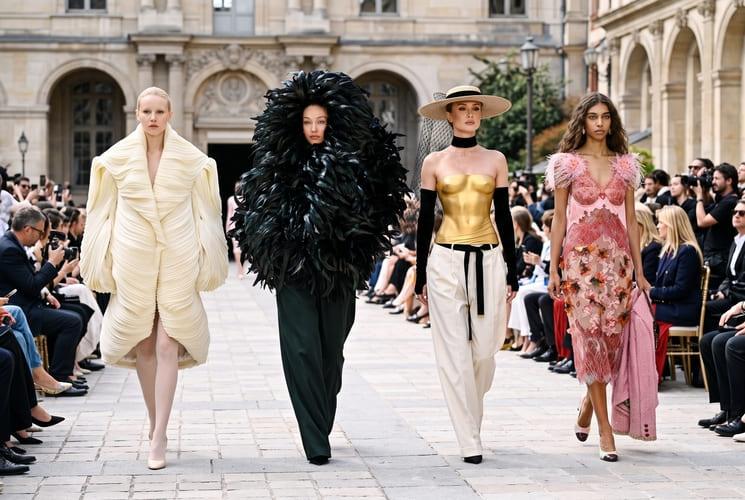

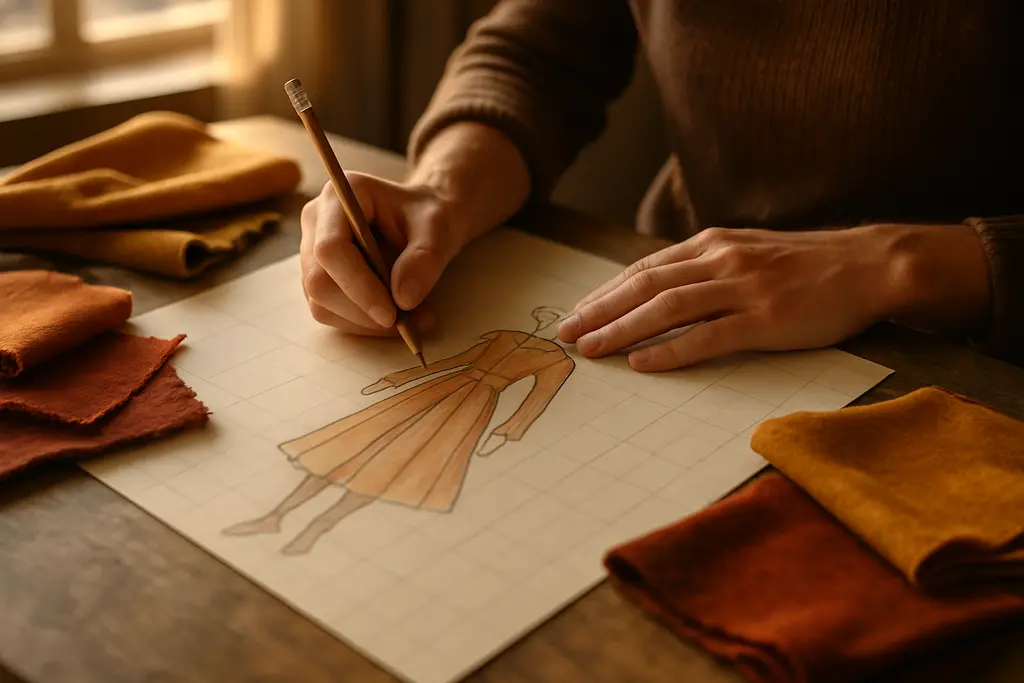
Fall Costume Patterns are most persuasive in 2026 when they treat runway mood as evidence, not as a costume copy sheet. The strongest maker work this fall borrows structure, texture, and proportion while leaving named designer looks intact. Think of a sewing table under a small amber lamp: brocade scraps on one side, paper sleeve blocks on another, a thrifted blazer waiting to become the spine of a character. The task is not to imitate Dior, Valentino, Khaite, or any other house. The task is to study what the season has made visible—brocade, jacquard, romantic collars, trains, muddy earth tones—and translate those cues into original, wearable forms.
How Fall Costume Patterns Read The 2026 Runway
The fall 2026 signals are unusually useful for costumers because many of them already live near theater: texture, high necklines, shadowed palettes, long sleeves, and shaped volume. Who What Wear reported brocade and jacquard among the season’s notable runway textures, with designers including Dior, Valentino, and Khaite using ornate surfaces in jackets, skirts, and evening pieces Who What Wear trend report. Vogue also described fall 2026 trends that include earthy color stories and dramatic mood, which gives makers a factual base for color and proportion choices Vogue fall 2026 trends.
The caution is simple. A runway reference is not a sewing instruction, and a designer garment is not free raw material. For handmade costumes, the cleaner method is to extract category-level ideas: a raised collar, a jacquard panel, a sleeve with volume at the head, or a brown-and-forest-green contrast. These details can become new pattern decisions without copying a specific look.
Fall Costume Patterns With Brocade Logic
For Fall Costume Patterns, brocade and jacquard should be treated as architectural cloth. They often carry more body than plain cotton or jersey, so they work best in contained zones: bodice fronts, cuffs, standing collars, detachable peplums, waist cinchers, or cape yokes. A full gathered skirt in a stiff ornate fabric can become heavy and hard to wear. A smaller insert can still burn like a little furnace at the center of the costume.
A practical tutorial should begin with a swatch test. Fold the fabric over an interfaced edge, press it lightly, and see whether the design becomes bulky. If the cloth refuses a crisp fold, avoid tiny seam allowances and narrow curved pieces. Let the pattern breathe: broad panels, fewer seams, and visible topstitching will usually serve the surface better than fussy piecing.
Pattern Architecture For Texture And Mood
Romantic historical detail is one of fall’s strongest costume gifts, yet it demands restraint. High collars, puffed sleeves, ruffles, trains, and bustle suggestions can give a costume the long haunted silhouette of a candlelit hallway. Still, a maker does not need a full Victorian reproduction to achieve that mood. One strong feature is usually enough. A plain black base dress with an exaggerated sleeve tells the story more clearly than six competing trims.
Victorian Volume Without Costume Theft
The safest pattern route is abstraction. Instead of copying a specific museum garment or runway gown, draft a detachable bustle pad, a back apron, or a half overskirt that hints at period structure. Use modern fastening, such as ties, snaps, or a belt channel, so the piece can be removed when sitting or traveling. This matters for comfort as much as design. A costume that cannot be worn for more than twenty minutes has failed the maker, no matter how poetic it looks on a hanger.
Puffed sleeves deserve the same engineering. Start with a sleeve pattern that already fits the armhole. Slash and spread the cap for height, then control the volume with a firm lining or an organza sleeve head. Beginners should resist changing armhole shape and sleeve fullness at the same time. Alter one variable, test it in muslin, and then move to the final cloth.
Earth-Tone Colorblocking As Pattern Control
Colorblocking in muddy browns, deep greens, and related earth tones can help a costume read as fall without turning into a pile of seasonal symbols. Use darker panels where the body needs visual grounding: side seams, trouser legs, waistbands, and cape undersides. Place lighter or patterned cloth near the face or upper chest only if it supports the character. A forest-green sleeve against a dark brown bodice can feel like moss after rain; a random patch of contrast may look like an accident.
For related craft planning, the site’s article on fairytale DIY outfits connects fall 2026 cues with bows, volume, pearls, and texture in a way that can support costume sketches without forcing a single formula.
Tutorial Choices For Inclusive Costume Making
A good tutorial is not proven by pretty final photos alone. It should show pattern pieces, seam order, fitting points, closure choices, and fabric substitutions. The research notes for fall 2026 point toward tutorials using wrap bodices, long sleeves, soft knits, gingham, checks, corduroy, and deep florals. Those materials can be useful, but each behaves differently. Corduroy has nap. Knit stretches. Brocade frays. Gingham reveals crooked cutting lines. A serious maker reads fabric behavior before cutting the fantasy.
Testing Fall Costume Patterns For Fit
Testing Fall Costume Patterns is not a luxury step; it is the place where the costume becomes humane. Comfort and fit have become central concerns in costume buying and making, according to the research notes, and that concern belongs at the pattern table. Build in movement at the shoulder, arm, waist, and thigh. If a costume includes a train, test stairs. If it includes a cape, test turning through a doorway. If it includes a mask or high collar, test breathing, hearing, and head movement.
Inclusive pattern thinking also means planning adjustment points. Side ties, elastic backs, laced panels, wrap closures, and modular belts can serve different bodies without making the design look unfinished. For children’s costumes, mobility and fast removal matter. For adults, the same is true, though vanity often tries to argue otherwise.
Modular Tutorials And Reuse
The modular costume method—an anchor outfit plus detachable hero pieces—is especially useful for budget and storage. A black jumpsuit, brown skirt, fitted blazer, or plain dress can support several identities through removable layers: a cape for gothic romance, a brocade belt for courtly drama, a bonnet for pastoral melancholy, or a sheer oversleeve for spectral softness. For broader insights within the same network, visiting Robsonic can enhance your understanding of visual style across different scenes.
This modular approach also helps avoid overbuying. The maker can spend on one good textile moment rather than a cart full of weak trim. If the ornate fabric budget is small, bind a collar, face a cuff, or create a removable stomacher panel. A small controlled blaze is better than a whole garment that collapses under poor cloth.
Seller Notes For Original Costume Sets
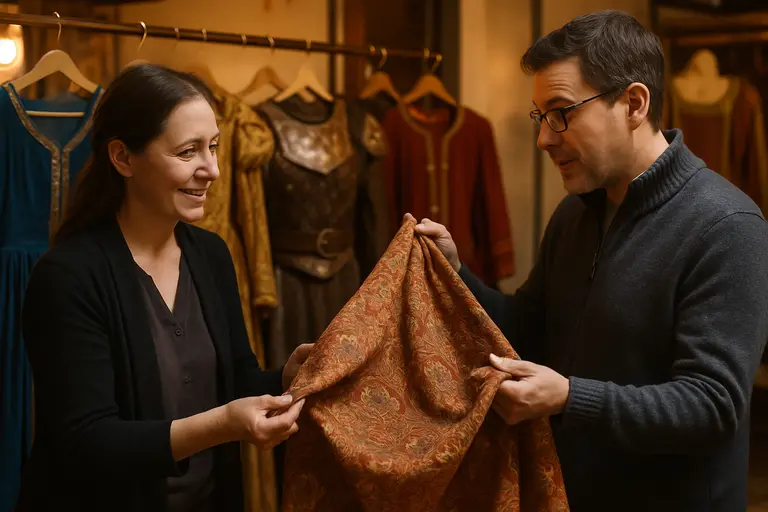
For creators selling handmade pieces, the most defensible product is an original costume set described by materials, construction, and mood rather than by another artist’s protected identity or a living designer’s signature. This is not legal advice. It is a practical way to respect other creators while making the listing clearer. Terms such as “earth-tone brocade capelet,” “romantic high-collar overskirt,” or “detachable puff-sleeve harness” describe what the buyer receives without leaning on someone else’s name.
Photographs should show the closure system, inside finish, and scale on a body or dress form. Measurements should be plain. If the piece is adjustable, say where: waist, shoulder strap, back tie, cuff, or neck. If it is not washable, say so before the sale. The spell is stronger when the buyer can trust the stitching.
Fall Costume Patterns For Wearable Drama
The best Fall Costume Patterns for this season behave like small stage sets built for real bodies. They use brocade and jacquard as controlled flame, Victorian details as silhouette rather than imitation, and earthy colorblocking as structure instead of decoration. They respect the runway by refusing to counterfeit it. They respect the wearer by allowing breath, motion, and adjustment.
Begin with one anchor garment. Choose one dramatic feature. Test the pattern in plain fabric. Add texture only where it earns its place. If the costume still reads clearly in muslin, the final version has a chance. If it depends on five trims, three references, and a paragraph of explanation, cut again. The moon does not need lace to be the moon; the pattern needs only enough shadow to tell its story.