
The intersection of fashion and technology has fundamentally changed how creators and enthusiasts approach costume design. Historically, fairytale costumes relied heavily on layered fabrics, intricate beadwork, and structural elements like corsets or crinolines to convey a sense of magic. Today, wearable technology allows these garments to literally illuminate, react, and transform. By equipping modern fashion designers with smart textiles and micro-electronics, the industry is bridging the gap between digital innovation and traditional tailoring. The result is a new era of heirloom-quality pieces that capture the wonder of fantasy narratives while remaining rooted in high-quality textile traditions.
In late 2026, the shift toward tech-infused fantasy apparel became increasingly visible at major cultural events. The “Dis-dressed” exhibition at MoCA Long Island showcased how memory and ritual intersect with garment creation, while PropCon in Daytona Beach highlighted the practical application of micro-electronics in cosplay armor and wearable art. These events demonstrate that integrating technology into costumes is no longer a novelty; it is a critical component of modern narrative dress, transforming ordinary fabrics into extraordinary, interactive experiences.
The Evolution of Fantasy Dress-Up
The concept of magical clothing has always been central to fairy tales, from cloaks of invisibility to shoes that dance on their own. For decades, costume designers attempted to replicate these effects using reflective fabrics, strategic lighting, and stage illusions. However, the miniaturization of electronics and the development of smart textiles have effectively turned imagination into reality, allowing everyday garments to mimic the enchanted items found in folklore.
At recent wearable art showcases, such as those hosted at the View Arts Center in Old Forge, New York, designers have demonstrated how handcrafted garments can seamlessly incorporate digital elements. The focus is no longer on bulky battery packs and visible wires, but rather on conductive threads, micro-LEDs, and sensors that respond to environmental stimuli. This evolution requires a deep understanding of both traditional dressmaking techniques and basic electrical engineering, challenging artisans to expand their skill sets beyond the sewing machine.

Specifying Smart Textiles and Micro-Electronics
When designing an heirloom-quality fairytale costume, the selection of materials is paramount. The goal is to enhance the garment with magical effects without compromising its drape, comfort, or long-term durability. Smart textiles offer a compelling solution by embedding technological capabilities directly into the fabric structure, ensuring the garment remains as fluid and wearable as its purely analog counterparts.
Conductive thread, typically spun from silver or stainless steel, can fully replace traditional copper wire. This allows creators to sew electrical circuits directly into the lining of a velvet cloak or the bodice of a silk gown, maintaining the garment’s flexibility. When paired with compact microcontrollers, such as the popular platforms developed by Arduino, these conductive circuits can power programmable LEDs, miniature sound modules, or shape-memory alloys.
For example, a dress inspired by a starry night narrative might utilize hundreds of micro-LEDs woven into an outer layer of midnight-blue silk organza. By programming the microcontroller to create a gentle, randomized twinkling effect, the garment truly comes alive. The critical challenge during fabrication is ensuring that these components are securely insulated against moisture and that power sources remain accessible yet entirely concealed.
| Component | Primary Function | Costume Integration Strategy |
| Conductive Thread | Replaces traditional wiring to connect electronic components | Sewn discreetly into interior linings or incorporated into decorative surface embroidery |
| Micro-LED Arrays | Provides localized, programmable illumination and color shifting | Embedded beneath sheer fabrics like organza or tulle for a softly diffused glow |
| Wearable Microcontrollers | Acts as the brain of the garment, controlling lights, sound, or kinetic movement | Housed in concealed, padded pockets with easily accessible battery terminals |
Case Studies in Wearable Art and Cosplay
At the October 2026 PropCon event in Daytona Beach, several vendor highlights underscored the rapid professionalization of tech-infused costumes. Makers showcased elaborate cosplay armor integrated with neo-pixel arrays and programmed servo motors, demonstrating a level of mechanical sophistication previously reserved for high-budget film productions. However, the most compelling booths were those that applied these advanced techniques to softer, more traditional fairytale aesthetics.
One notable example involved a reinterpretation of classic maritime fantasy. By embedding flexible fiber optics into heavily embroidered naval jackets and mermaid-inspired trains, creators achieved a stunning bioluminescent effect that remained entirely invisible when powered down. This approach proves that technology does not have to dominate the visual landscape of a garment; instead, it can serve as a hidden layer of magic that is only revealed when the narrative demands it.
Integrating Wearables Without Sacrificing Heirloom Quality
The true test of a technologically advanced fairytale costume is its ability to stand the test of time. Heirloom costumes are meant to be passed down through generations, which presents a unique challenge when incorporating electronics that may eventually become obsolete, require maintenance, or suffer from degraded battery life over decades of storage.
To address this, meticulous designers must adopt a modular approach to garment construction. Technological components should never be permanently bonded to the primary, historic fabric. Instead, they should be housed in detachable under-layers, easily unzipped linings, or concealed structural pockets. This ensures that the beautiful exterior garment can be gently washed, repaired, or completely updated with new technology in the future without damaging the fragile textile work.
Furthermore, the aesthetic integration of these components requires careful styling. A glowing LED should not look like a stark piece of modern hardware; it should be softened and diffused through natural materials, such as freshwater pearls, faceted crystals, or dense layers of sheer silk. By treating the technology as an extension of the traditional embellishment, designers successfully maintain the vintage, handcrafted appeal that defines a true heirloom.

The Role of Costume Context and Narrative
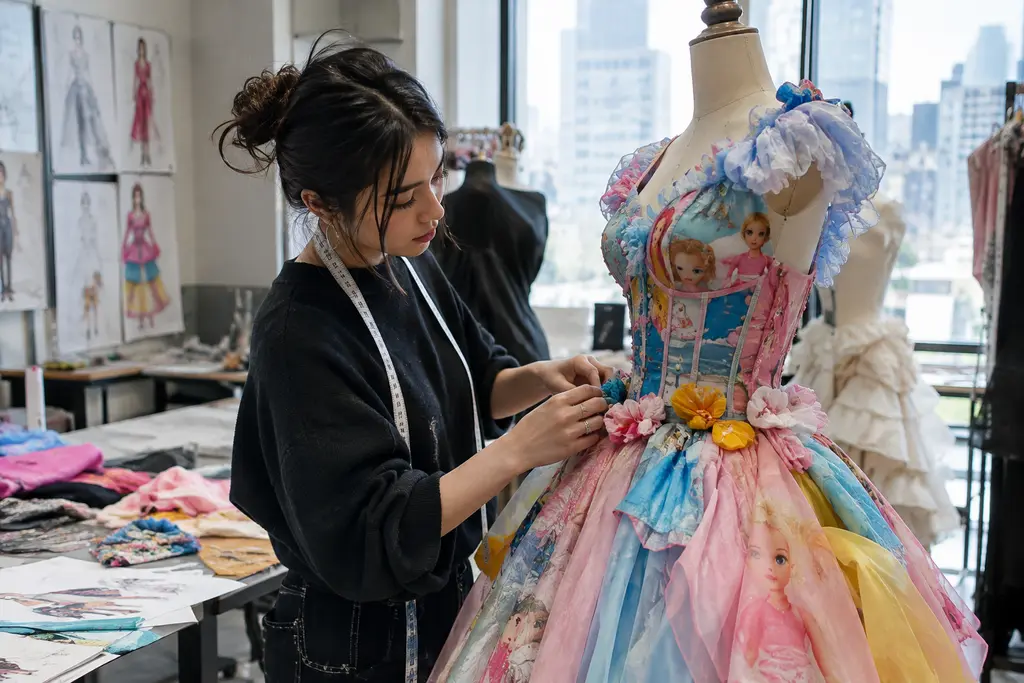
A successful fairytale costume tells a specific story, and any embedded technology should serve that narrative rather than overwhelming the wearer’s identity. The recent “Doll Dressing Costumes” exhibition at The Museum at FIT highlighted how scale, historical reference, and literary cues fundamentally influence garment design. When adding wearable technology, these same contextual principles apply heavily.
If a costume represents a woodland sprite, the technological elements might focus on bioluminescence or capacitive sensors that react to the proximity of organic materials. A gown designed for a snow queen, conversely, might incorporate fiber optics that simulate the crystalline structure of fracturing ice, glowing brighter as the ambient temperature drops. The technology must be purposeful, directly enhancing the character’s identity and the fictional world they inhabit.
This narrative focus also extends to the practicalities of dress-up play. Interactive garments encourage deeper engagement, emotional resonance, and highly imaginative play scenarios. When a wearer puts on a cloak that lights up in direct response to their sweeping arm movements, they are not just wearing a static piece of clothing; they are actively embodying a magical role.
Sustainability and Ethical Sourcing in Smart Textiles
As the industry integrates more technology into everyday garments, the environmental impact of these materials has become a pressing conversation. Heirloom quality inherently promotes sustainability by rejecting the fast-fashion model of disposable, single-use costumes. However, electronic waste introduces a complex new variable into the fashion supply chain. The batteries, rare-earth metals in microcontrollers, and synthetic conductive materials required for magical effects must be sourced responsibly.
Leading creators are actively experimenting with biodegradable conductive threads and energy-harvesting technologies to mitigate this impact. Piezoelectric fabrics, which generate small amounts of electricity simply through the friction of the wearer’s movement, offer a fascinating glimpse into a future where magical garments literally power themselves. This innovation reduces the reliance on disposable lithium-ion batteries and aligns the technological aspects of the costume with the naturalistic, enchanted themes often found in classical fairy tales.
The Next Generation of Enchanted Garments
The future of fairytale fashion relies on the continued, thoughtful synthesis of heritage craftsmanship and cutting-edge digital innovation. As smart textiles become more advanced, the industry anticipates fabrics that change color on command, garments that autonomously adjust their thermal properties, and costumes that interact seamlessly with mixed-reality environments.
However, the core appeal of these garments will always remain firmly rooted in their ability to evoke sheer wonder. The most successful designers will be those who master the delicate balance between the organic drape of a textile and the electronic pulse of a circuit. By prioritizing heirloom durability, modular construction, and rich narrative context, artisans can create costumes that are genuinely magical—both in their impressive technological capabilities and in the timeless stories they help us tell.